
A Tale of Two Consoles
Full disclosure before we start here: I am a hardcore Sonic fan.
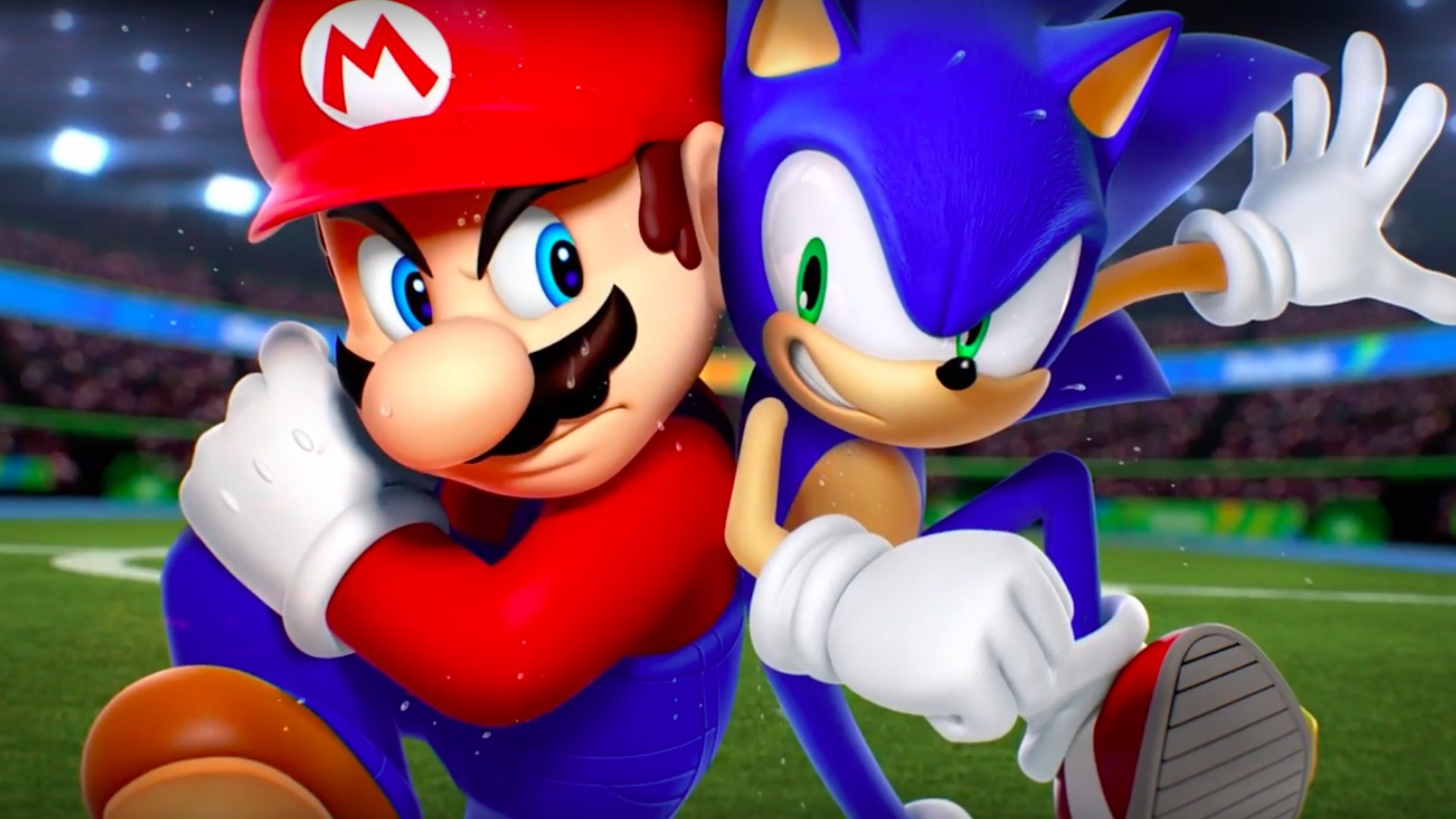 Though I didn’t have a choice in the matter of my first video game console (It was a Sega Genesis), I’d already drawn my personal battle lines through virtue of friends who lived and breathed the NES. In my eyes, Mario was a weird protagonist, his overalls as much design choice as workaround for sprite limitations, and I hadn’t at the time reconciled that his weird green pipe fetish was due to his profession as a plumber. But he had cool powers that also changed the color of his clothes, and who wouldn’t love being able to shoot fireballs from their hands, right? As much as I enjoyed his adventures above and below ground however, there was something special happening on the other side of the home console fence. Something I knew was unique from the moment I laid my hands on the Genesis’ three button controller. That something in fact, was a certain blue hedgehog.
What drew me to Sonic games over Mario’s was something that I can only describe as tangibility. Unlike his mustachioed, human counterpart, Sonic had a feeling of weight and presence in his environment. He was quick, nimble, and the limits of what I could reach or find in his world was highly dependent on momentum. It was a game built around holding forward, a necessary action needed to scale hills, burrow through walls, and complete his iconic 360 loops. Unlike Mario’s request that you slow down and experiment to find its many secrets, Sonic asked the exact opposite of you, all while placing numerous obstacles in your path to try and slow you down. The name of his game then, was maintaining that velocity, and usually after much trial and error, it became second nature, nigh the goal, to clear each Act in record time, and utilizing the best path possible.
By contrast, Mario felt as though his very presence in the mushroom kingdom was that of someone who played by his own rules. His challenges were slightly similar, but the movement felt off. Mario walked, and needed a “run” button to pick up speed—even though he didn’t actually accelerate in any traditional sense. The B button was a literal 0-60mph function that would generate speed on a dime, and unlike the hedgehog, he didn’t seem to obey any established rules in his world as a consequence of that movement. Sonic needed enough flat ground to pick up enough speed to jump and clear a pit, and yet, he needed to slow down in time lest he skid into a trap. Mario, by contrast, simply needed to hold a button in order to break the laws of physics. It’s something that kept me away from his games for years until he entered the 3D realm.
Super Mario Inertia
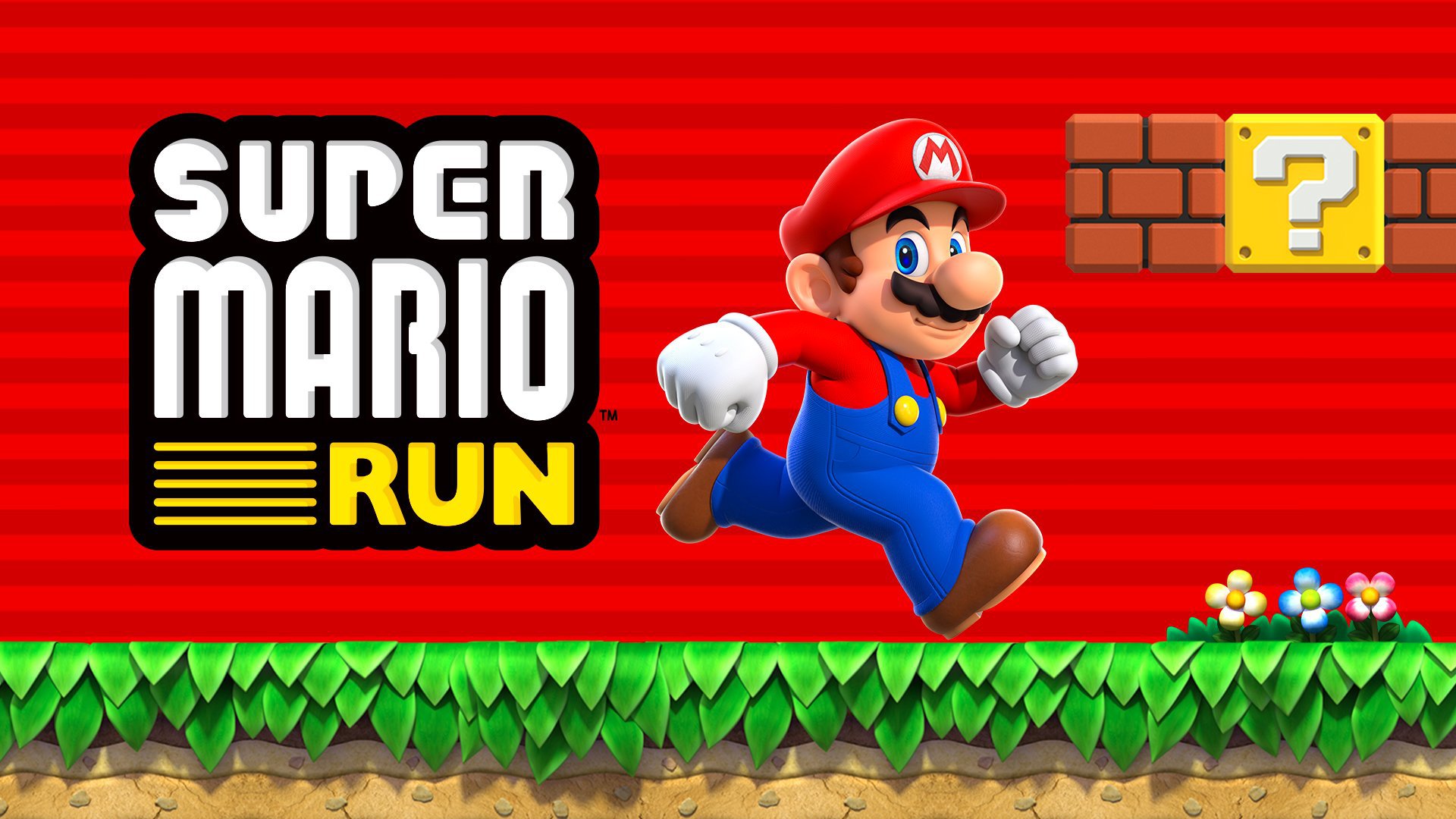
But, I hear you asking more than halfway into this review: What did this chunk of my childhood have to do with Super Mario Run, Nintendo’s first foray into the mobile realm, and why? It marks the first time I can recall that a Mario game has momentum as its central conceit. It’s literally, as it’s title implies, a game about running, about avoiding obstacles, solving physical puzzles, and the kind of rewarding repetition through trial and error that makes completing a level perfectly equal to the satisfaction I’m certain any speedrunner feels on a good day. Just like the game that stole my attention away from him when I was younger, Mario takes off at the beginning of each stage and never looks back. It’s as surreal as it is surprising for the character, and it completely works.
The game lays its rules out as intuitively and as organically as any Mario game: Since you’re constantly running forward, your only options are to jump. This one button scheme adds its own layer of complex movements and actions, as Mario vaults over waist-high objects and enemies if you leave him heading in a straight line, or moves towards wall kicks and flips whenever you encounter walls. The vertical view is also less a hindrance, and more a restriction that gives the title a Sonic-like sense of unpredictability in it’s level design. Since the perspective effectively blocks you from being able to prepare like you would a regular Mario game, the obstacles are exciting and twitch-based. Just when you’ve gotten comfortable with the horizontally scrolling lands, later in the game, vertically scrolling levels reveal themselves and open to an entirely new set of rules, with beats of their own. It looks and feels like New Super Mario Bros, but with a welcome parkour twist that’s as much fun to watch in action as it is to experiment with.
That experimentation is key, as SMR is definitely a game of repetition, and one that demands mastery of it’s bag of tricks that can’t possibly be seen the first time through. Even though you would be hard pressed to find yourself in a situation where you’re unable to progress to the end of a stage (thanks in part to a clutch, life saving bubble), there are multiple reasons to replay each stage. With a series of hidden coins that alter the challenge and the way you approach levels significantly, the combination of familiarity gets turned on its head and leaves the door open to some truly brilliant hiding places. When I say I mined about two hours worth of playtime out of mastering the first three stages, I absolutely mean it. Like a puzzle game that forces you to look at it from multiple angles, running between Worlds 1-1 and 1-3 Felt less like a race to the goal, and more like a carefully broken jigsaw that needed repairing. In those three levels, I was able to hone my jumping and floating skills to a tee, confident I would be able to handle my first battle with Bowser with panache.
Super Mario Runs…away with your wallet?
 …Then World 1-4 began, and ended in a matter of seconds.
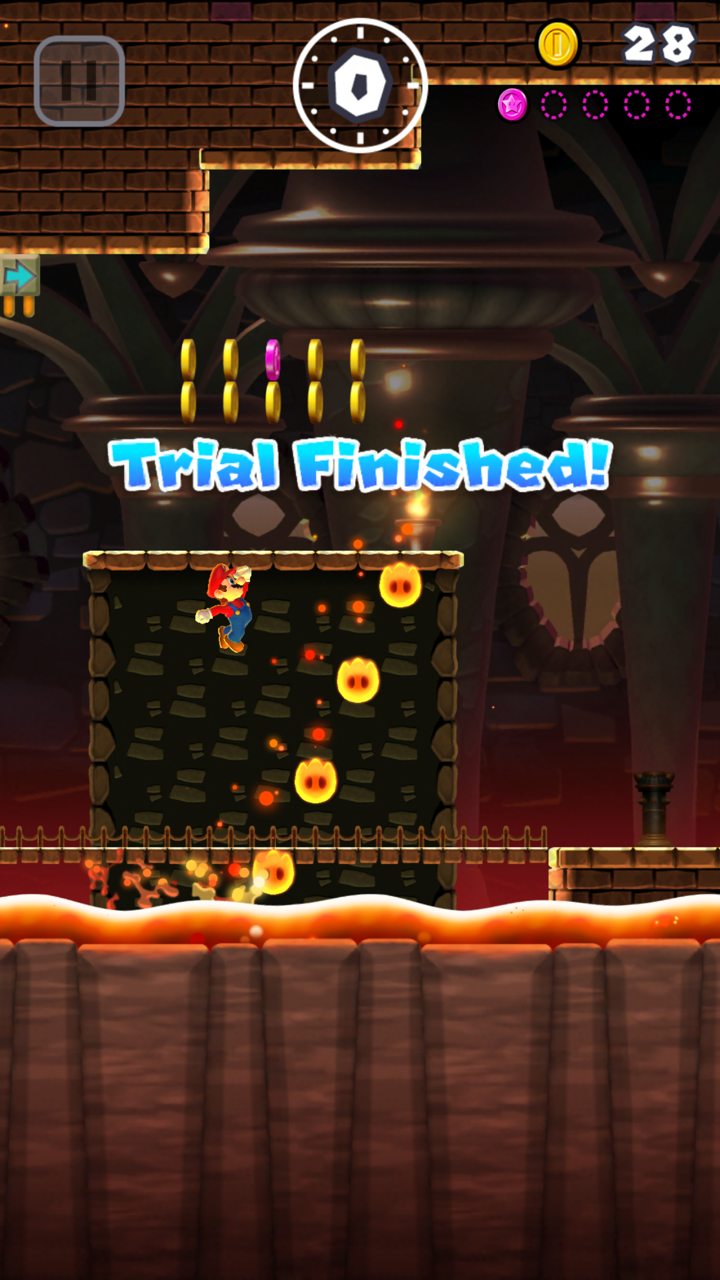 You may have missed it, but that sound you’re hearing is the faint echo of 2.85 million simultaneous instances of buyers remorse on the first day, as players the world over realized the free app they downloaded was actually a demo. Not just a demo, but one that conveniently ends before you can even see Bowser for the first time. Yes, as it’s been widely reported and derided, during the fourth level, just as it’s introducing a slew of new mechanics, it asks you to pay up to see the rest. Now, while this was a controversial move that many people saw as a cynical, greedy pulling out of the rug, at the same time, with an asking price of $9.99 USD, is it really so exorbitant when the average 3DS Mario title releases at $39.99? I wouldn’t say so. Does that mean I personally feel it’s comparable in terms of value, even as a mobile title? Yes. Do I think Nintendo should’ve been more upfront about the content prior to downloading, or at least offered a full world instead of snidely putting the velvet rope in your path right as the front of the line had been reached?
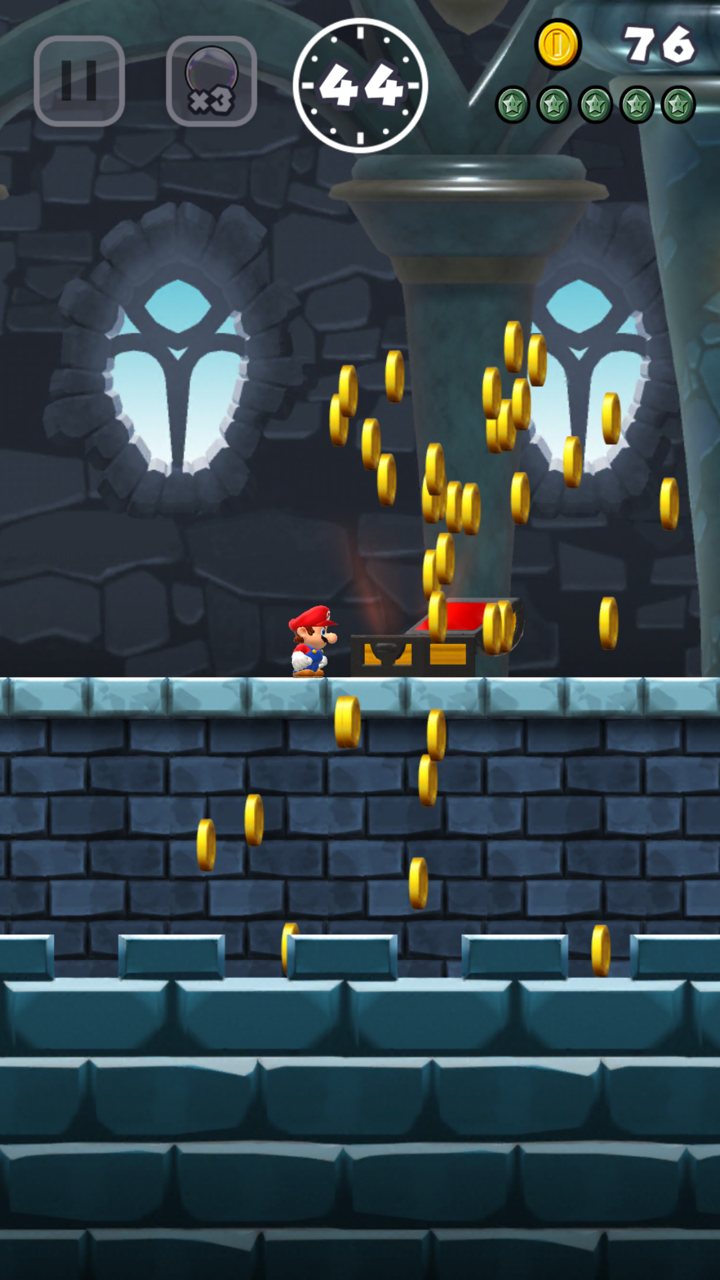 Yes. Clearly, Nintendo is new at this, and has much to learn about the value proposition upfront on a mobile title released in a majority F2P climate. The goodwill generated by being an initially free download is very unfortunately, blighted by this twist that is outright Shyamalanyan in nature. But despite my feelings towards this controversial bait-and-switch, the game still has more depth in it’s pinky as a platformer than most App Store offerings out there. The World Tour mode is a Mario game proper that benefits from its unique mechanics and mobile-friendly length levels, while Toad Rally mode remixes regular stages into leaderboard challenges, transforming the game into a true endless runner on a timer. All of the earnings from that mode can be used towards becoming mayor to your own unique version of the Mushroom Kingdom, and while the building aspect is a bit shallow, the variety of the rally mode itself more than makes up for it by turning the mode into a skill-based race to the top. For a game lacking a true multiplayer mode, it succeeds in feeling enough like a social activity to be consistently entertaining in short bursts.
In fact, if there’s any complaint to be had here, it’s in Nintendo’s occasionally stubborn refusal to keep from Nintendo-ing all over themselves. It seems that for every innovation they come up with, there’s an unnecessary restriction, or backwardly designed feature holding the title back from explicit greatness. In Mario Run‘s case, it’s a required online connection, presumably to combat piracy in theory, but in practice, it just limits the amount of situations where you can just sit down and enjoy the game on your own.

Such a relatively small issue isn’t enough to keep this game from being a worthy entry in the Mario franchise, however. At it’s core, Super Mario Run is a well crafted, extremely polished first entry in formerly uncharted waters, and as exciting as that may be, if Nintendo learns the right lessons from this title, we could be witnessing the start of a beautiful relationship.